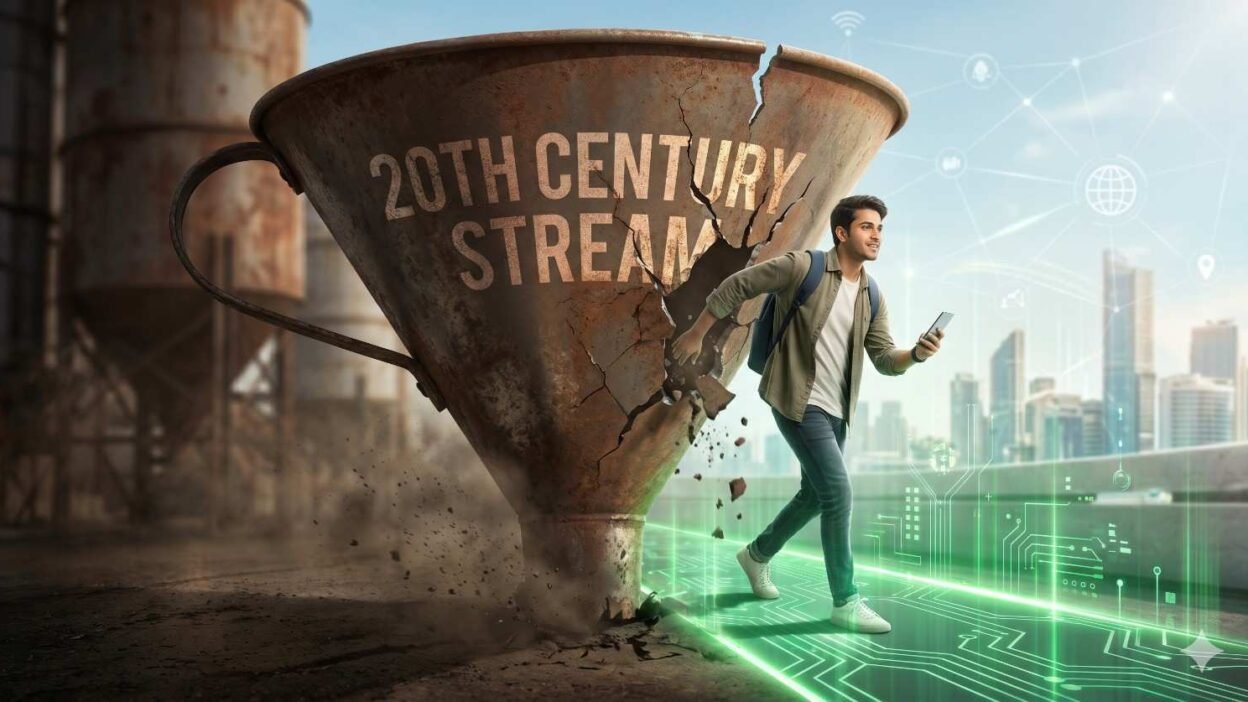
For decades, the period immediately following 10th-grade exams has been treated like a high-stakes crossroads. The traditional advice is always the same: “Pick Science if you want a ‘real’ career, Commerce if you’re good with numbers, and Arts if you have no other choice.”
But here is a reality check for 2026: The world has moved on, but the advice hasn’t
If you are standing at this crossroad today, whether you are in India, the UK, the US, or anywhere else, the “subject stream” you choose is becoming secondary to the skills you build alongside it. Here is the modern blueprint for what actually matters after 10th grade.
1. The Death of the “Single Lane” Career
In the past, your choice of subjects was a tunnel. If you chose Science, you became an Engineer. If you chose Commerce, you became an Accountant.
Today, the most successful people are Hybrid Professionals. We are seeing students with a background in Humanities who understand Data Analytics out-earning traditional specialists. We see Science students who master Digital Marketing to launch global startups. Your 10th-grade choice is no longer a life sentence; it’s just a foundation.
2. The “Hidden” Subject: Digital Literacy
Regardless of whether you choose Biology or Business Studies, there is one subject no school effectively teaches: How to leverage the Digital Economy.
While you are moving into your senior years of schooling, the highest ROI (Return on Investment) you can get is by spending a few hours a week learning:
- AI Collaboration: Learning how to use AI tools to solve complex problems and automate boring tasks.
- Low-Code Tools: Learning how to build apps or websites without needing a Computer Science degree.
- Global Financial Literacy: Understanding how the digital economy and global markets actually function.
3. Your “Proof of Work” is Your Real Degree
In a globalized world, a 10th-grade certificate is just an entry ticket. The real differentiator is your Proof of Work.
Instead of just focusing on getting a perfect score, start building something “in public.” Whether it’s a small blog, a curated newsletter, or a repository of basic projects, having a digital footprint shows university recruiters and future employers that you have initiative. In 2026, a link to a project is often more powerful than a grade on a paper
4. The Global Talent Pool
You aren’t just competing with the student in the next classroom; you are competing with students in London, New York, Singapore, and Mumbai.
The internet has leveled the playing field. A student today has access to the same high-level resources as someone living in a tech hub. If your school curriculum feels outdated, don’t wait for it to change—supplement it. Use global platforms to learn high-value skills that the standard syllabus hasn’t included yet.
5. Strategy Over Stress
To the parents and students feeling the pressure: Breathe. The goal of the next two years isn’t just to survive exams. The goal is to experiment. Use this time to find the intersection of what you are good at and what the world actually needs.
- If you like logic: Pick Science, but learn Finance.
- If you like people: Pick Humanities, but learn Data Science.
- If you like business: Pick Commerce, but learn Tech Automation.
The Bottom Line
10th grade is not the end of your options; it is the beginning of your ability to customize your life. Don’t let a 30-year-old mindset dictate your 2026 reality.
The stream you choose matters far less than the engine you build inside yourself.