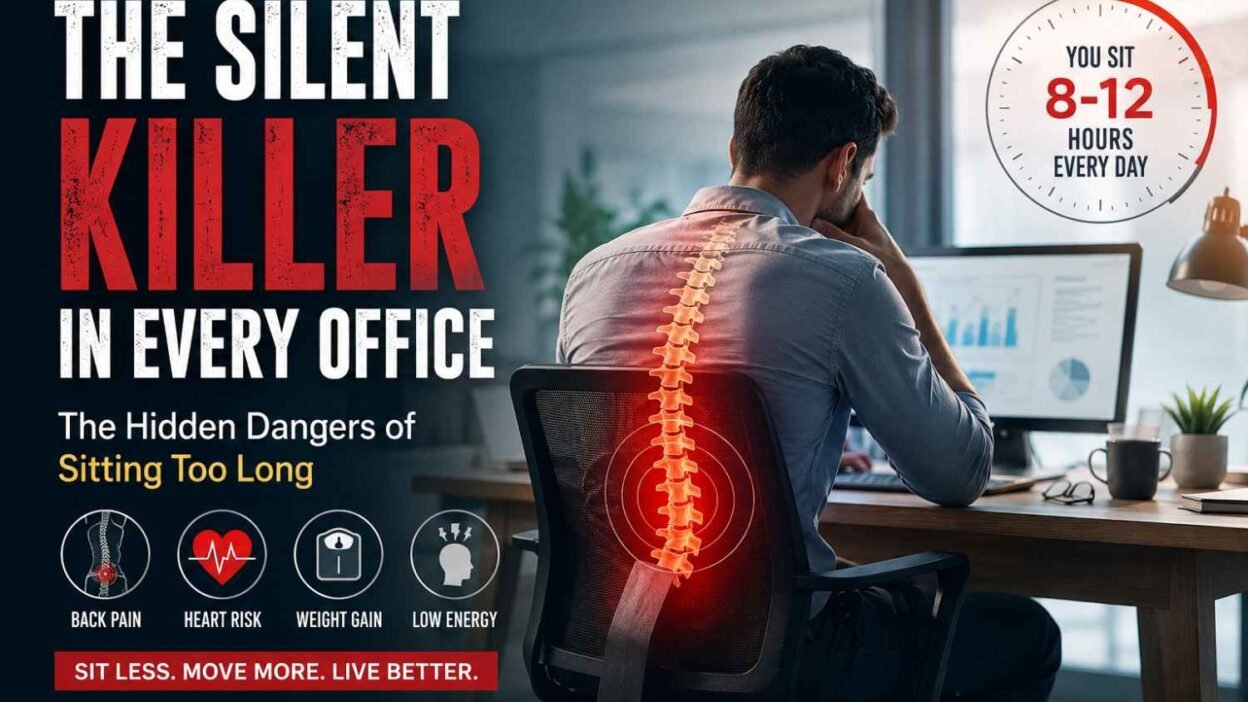
For millions of professionals, a typical workday begins with sitting in front of a computer and ends the same way. Whether you’re an IT engineer, accountant, designer, student, or remote worker, spending eight to twelve hours seated has become the new normal.
What many people don’t realize is that prolonged sitting has earned the nickname “the silent killer.” Unlike an injury that causes immediate pain, the effects of excessive sitting develop gradually. Over months and years, it can contribute to poor posture, muscle weakness, weight gain, reduced circulation, chronic back pain, and an increased risk of long-term health conditions.
The good news? Small daily changes can dramatically reduce these risks without requiring expensive equipment or a gym membership.
What Happens to Your Body When You Sit Too Long?
Your body is designed to move. When you remain seated for extended periods, several important systems begin to slow down.
Your Muscles Become Inactive
The muscles in your legs, hips, and core become less active, causing them to weaken over time. Weak muscles provide less support for your spine, increasing the likelihood of lower back pain.
Blood Circulation Slows
Movement helps your heart circulate blood efficiently. Sitting for hours can reduce circulation, leading to swollen feet, tired legs, and discomfort.
Calories Burn More Slowly
Physical activity naturally burns energy. Long periods of sitting reduce calorie expenditure, making weight management more difficult.
Poor Posture Develops
Many office workers lean toward their monitors or round their shoulders while typing. Over time, this can contribute to neck stiffness, shoulder pain, and spinal strain.
Mental Energy Declines
Remaining in the same position for hours can also affect concentration. Short movement breaks often improve alertness and help reduce mental fatigue.
Signs You’re Sitting Too Much
You may be spending too much time seated if you regularly experience:
- Neck stiffness after work
- Tight shoulders
- Lower back pain
- Tingling or numbness in your legs
- Feeling tired despite sitting all day
- Poor posture in photos or video calls
- Difficulty concentrating during long meetings
Many people assume these symptoms are simply part of office life, but they’re often signals that your body needs more movement.
Why Office Workers Are at Greater Risk
Modern workplaces encourage sitting almost constantly.
A typical day might include:
- Morning commute
- Desk work
- Video meetings
- Lunch at your desk
- Afternoon computer work
- Evening TV or mobile phone use
By the end of the day, many people have spent more than ten hours sitting.
Technology has improved productivity, but it has also significantly reduced the amount of movement built into our daily routines.
Small Changes That Make a Big Difference
The goal isn’t to avoid sitting completely—it’s to avoid sitting continuously.
Here are practical ways to stay active throughout the day.
Stand Up Every 30 to 60 Minutes
Set a reminder on your computer or smartwatch to stand, stretch, or walk briefly. Even one or two minutes of movement can help reduce stiffness.
Walk During Phone Calls
Whenever possible, take phone calls while walking instead of sitting.
Stretch Your Neck and Shoulders
Simple stretches performed several times a day can relieve tension caused by long hours at the computer.
Stay Hydrated
Drinking enough water benefits your health and naturally encourages regular walks to refill your bottle or visit the restroom.
Take Walking Meetings
If a meeting doesn’t require a presentation or screen sharing, consider discussing it while walking.
Use the Stairs
Whenever practical, choose stairs instead of elevators to add more movement to your day.
Creating an Ergonomic Workspace
An ergonomic workstation reduces unnecessary strain on your body.
Here are a few basics:
- Keep your monitor at eye level.
- Position your feet flat on the floor.
- Keep your elbows close to your body at about a 90-degree angle.
- Use a chair that supports your lower back.
- Avoid leaning toward the screen.
Good posture doesn’t eliminate the need for movement, but it does reduce unnecessary stress on your muscles and joints.
Does a Standing Desk Solve the Problem?
Standing desks can be useful, but they’re not a complete solution.
Standing all day may create its own discomfort. The healthiest approach is to alternate between sitting, standing, and walking throughout the day.
Movement—not simply standing—is what your body benefits from most.
A Simple Daily Movement Routine
You don’t need a complex fitness program.
Try this office-friendly routine:
- Stretch for two minutes after arriving at work.
- Stand up every hour.
- Walk for five minutes after lunch.
- Stretch your shoulders during afternoon breaks.
- Take a short walk before finishing work.
These small habits can add up to meaningful improvements over time
Your Future Health Starts Today
Many office workers don’t notice the effects of prolonged sitting until discomfort becomes a daily problem.
The encouraging news is that your body responds well to regular movement. Frequent short breaks, better posture, and simple exercises can improve comfort, energy, and overall well-being.
You don’t have to spend hours in the gym to protect your health.
Sometimes, the healthiest decision you can make is simply to stand up and move.
Success in today’s workplace often means spending long hours at a computer, but productivity shouldn’t come at the expense of your health.
Start with one small change today:
Stand up.
Stretch.
Walk.
Repeat tomorrow.
Your body will thank you for it.
Quick Office Health Checklist
✅ Stand up every 30–60 minutes
✅ Drink enough water throughout the day
✅ Stretch your neck and shoulders regularly
✅ Walk after lunch whenever possible
✅ Keep your monitor at eye level
✅ Sit with good posture
✅ Take the stairs when you can
✅ Aim for at least 30 minutes of physical activity most days
Disclaimer: This article is intended for educational purposes only and should not be considered medical advice. If you have persistent pain or health concerns, consult a qualified healthcare professional